
JMV DESCRIBED Knowledge organization series
How things get named, described and found.
A newsletter that applies library and information science to real problems, starting with AI governance hiring: why one job hides behind five titles, and what a better description looks like. Three series grow out of it: Knowledge Cleanup, Data Exhaust and Governance Simplified.
 Latest issue: Which version should I trust?
Issues
Read the series
-
Issue 03 · November 2026
Which version should I trust?
The newest file isn’t always the right one. What to do with all the other copies, why the newest file wins by default, and who gets to decide which version is official.
-

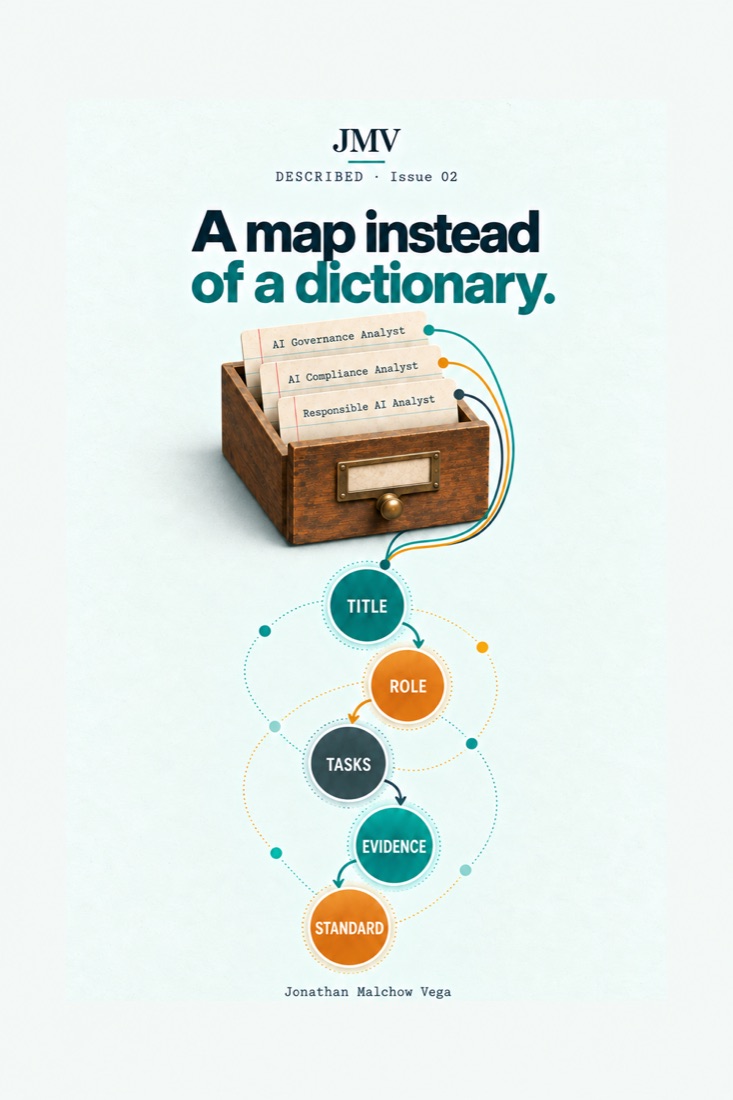
Issue 02 · October 2026
What the job actually is
Why a job title tells you less than you think. How a library finds a book you can’t name, why keeping a list is not checking one, and how an ontology links a title to its role, tasks, evidence and the standard behind them.
-
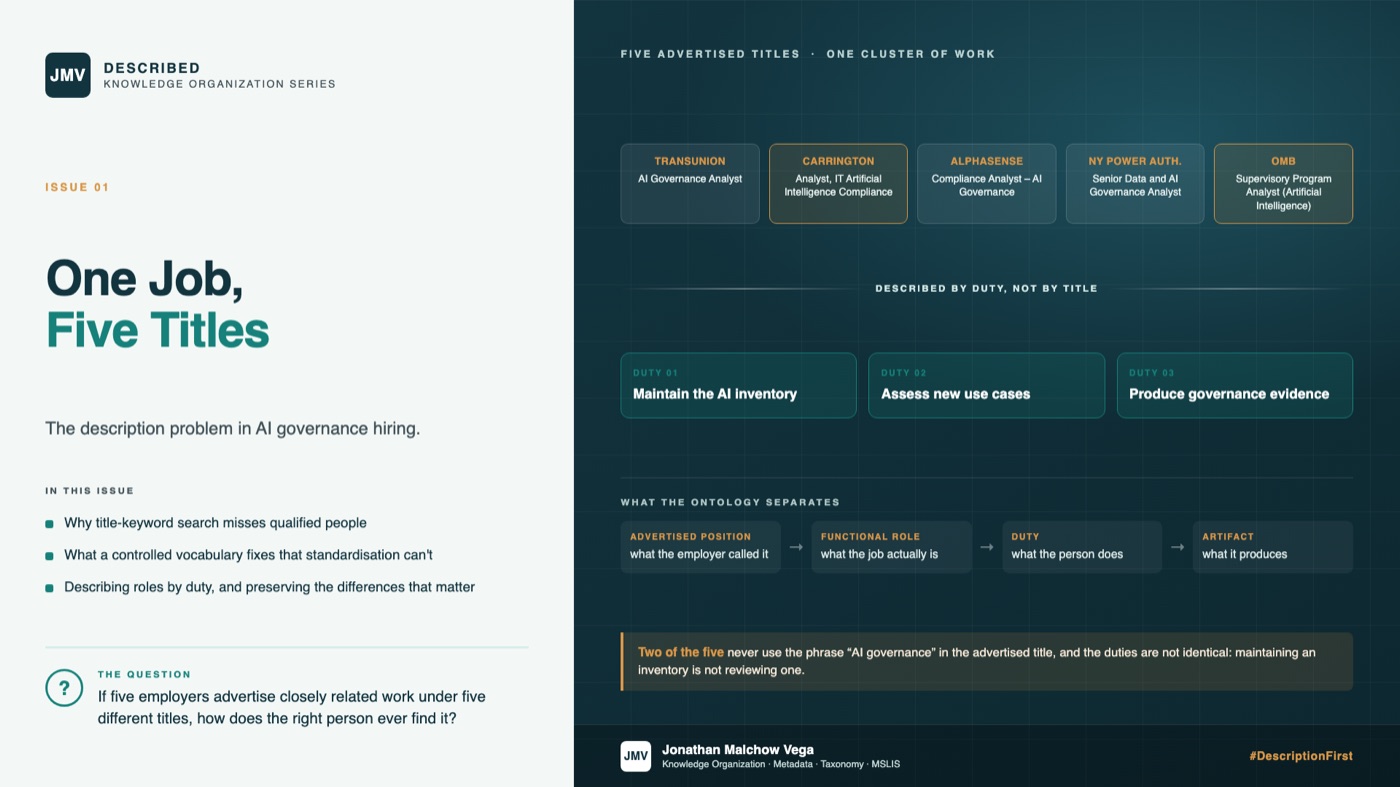
Issue 01 · September 2026
One job, five titles
Five employers advertise substantially the same AI governance duties under five different titles, and two of those titles never say “AI governance” at all. Why it happens, the honest counter-argument, and why a controlled vocabulary is the fix.
Read on Substack | First published on GRC Careers | LinkedIn
Part of DESCRIBED
Three series, one question
Organizations produce more information than they can easily understand, maintain or govern. Each series takes one part of that problem.
-

DESCRIBED · Knowledge Cleanup
Knowledge Cleanup
Names, versions and metadata. How to make information findable, and how to tell which copy to trust.
-

DESCRIBED · Data Exhaust
Data Exhaust
The traces everyday work leaves behind: drafts, logs, duplicates. What they can tell us, and what they can’t.
-

DESCRIBED · Governance Simplified
Governance Simplified
Owners, actions and records. Practical governance a small team can follow, starting with a free decision record.
Ideas in one picture
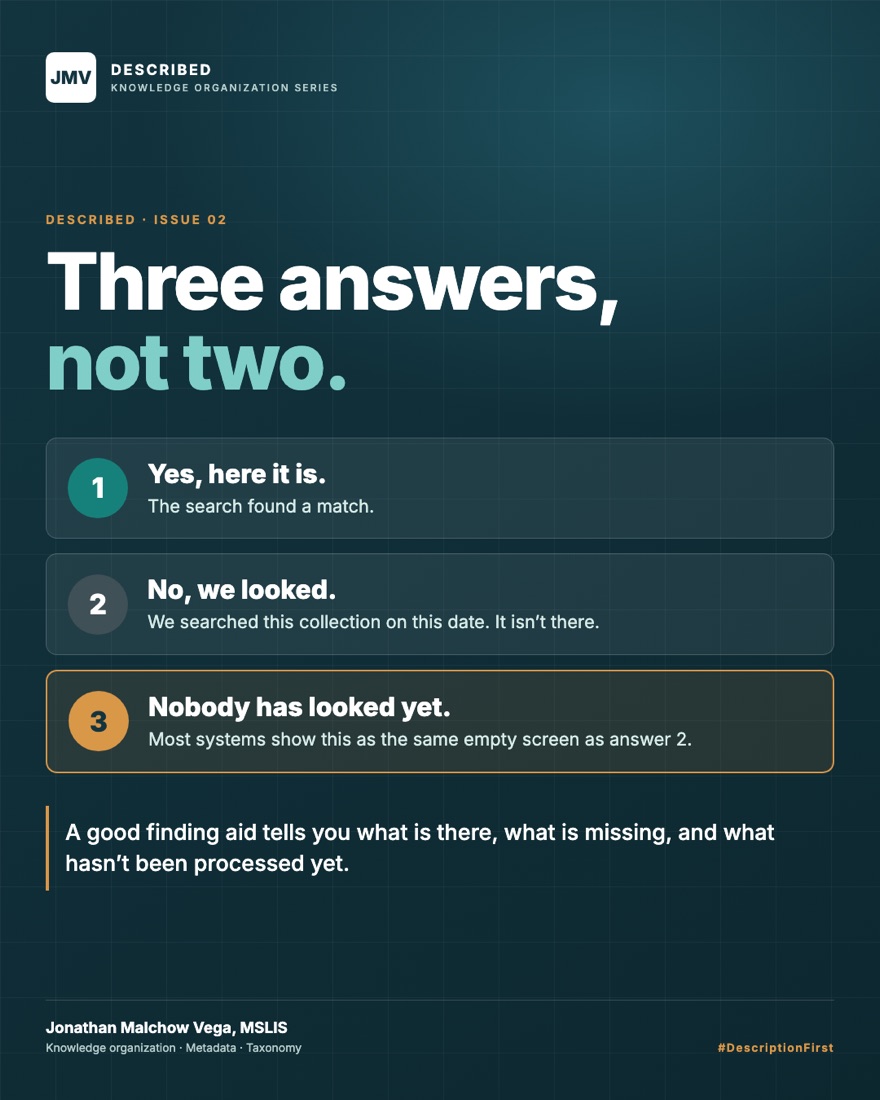
The series, at a glance
Free download
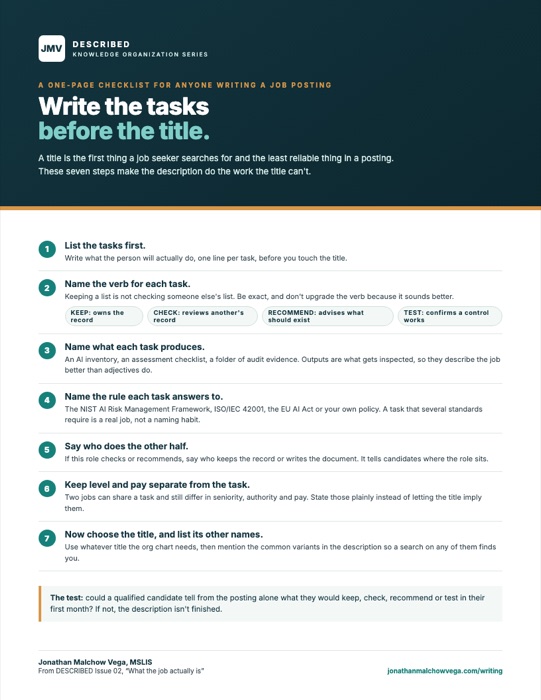
Write the tasks before the title
A one-page checklist for anyone writing a job posting. Seven steps: list the tasks, name the verb (keep, check, recommend, test), name what each task produces and the rule it answers to, and choose the title last.
Also written
-
A job board that chose not to track its users September 2026
Why a privacy-first design is product strategy, not just ethics, for a job board whose audience is privacy, compliance and AI governance professionals.
Subscribe on Substack to get new issues by email.
Questions DESCRIBED answers
Short answers
What is DESCRIBED?
DESCRIBED is a newsletter by Jonathan Malchow Vega that applies library and information science to real problems. The first issues look at AI governance hiring: why one job is advertised under many titles, and how better descriptions make the right jobs findable. It publishes on Substack and as a LinkedIn newsletter.
What is a controlled vocabulary?
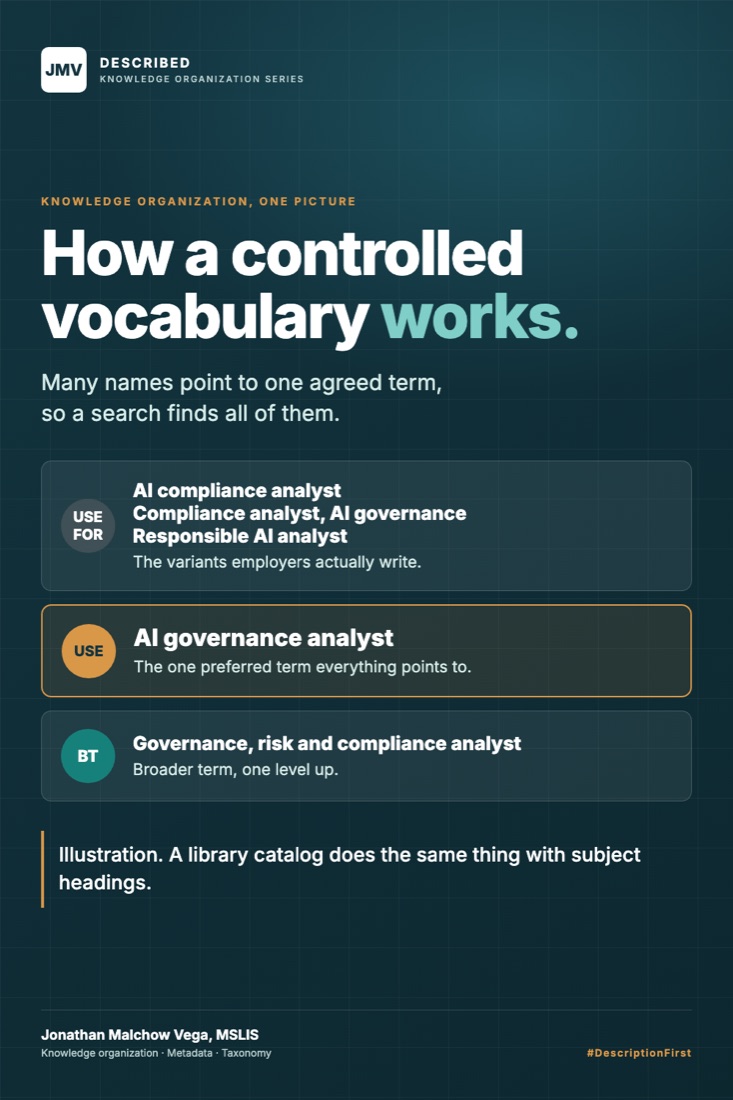
A controlled vocabulary is an agreed list of terms where each concept has one preferred term and the variant names point to it. A search on the preferred term then finds everything, whatever word the author used. Library subject headings work this way.
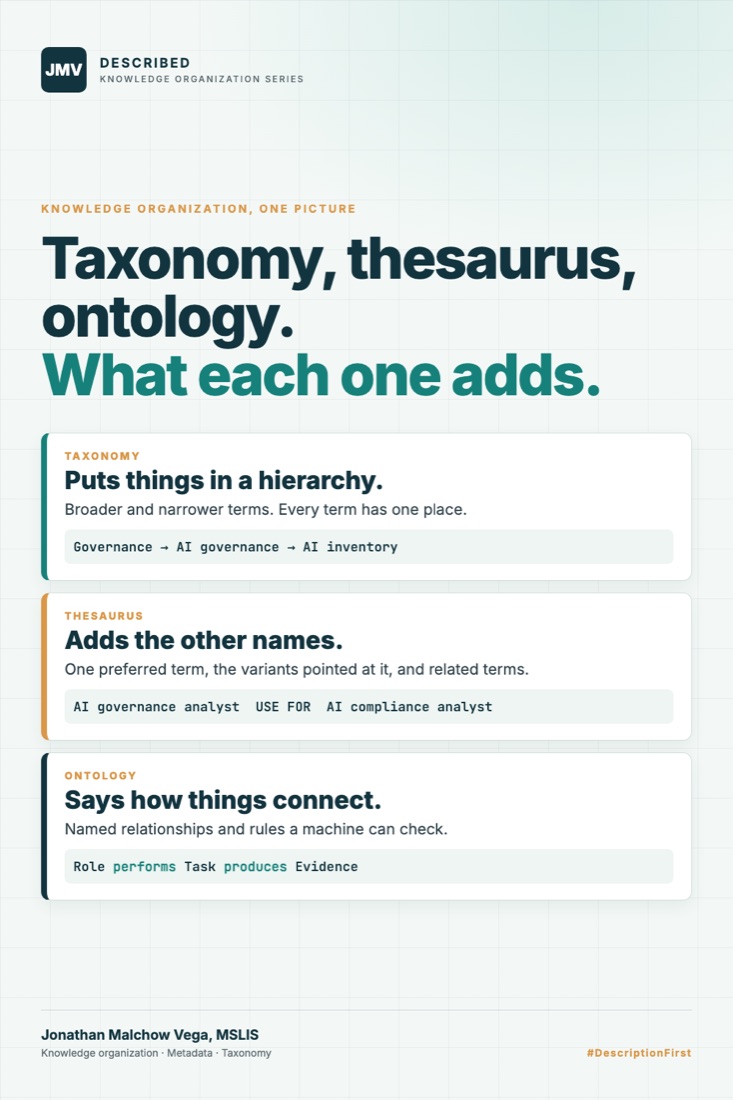
What is the difference between a taxonomy, a thesaurus and an ontology?
A taxonomy arranges terms in a hierarchy of broader and narrower terms. A thesaurus adds synonyms and related terms around one preferred term. An ontology goes further and names how things connect, such as a role that performs a task that produces evidence, with rules a machine can check.
Why do AI governance job titles vary so much?
DESCRIBED Issue 01 found five employers advertising substantially the same AI governance duties under five different titles, and two of those titles never use the words “AI governance.” Titles reflect each employer’s naming habits, so the tasks in a posting say more about the job than its title does.
What does “keep, check, recommend” mean in a job posting?
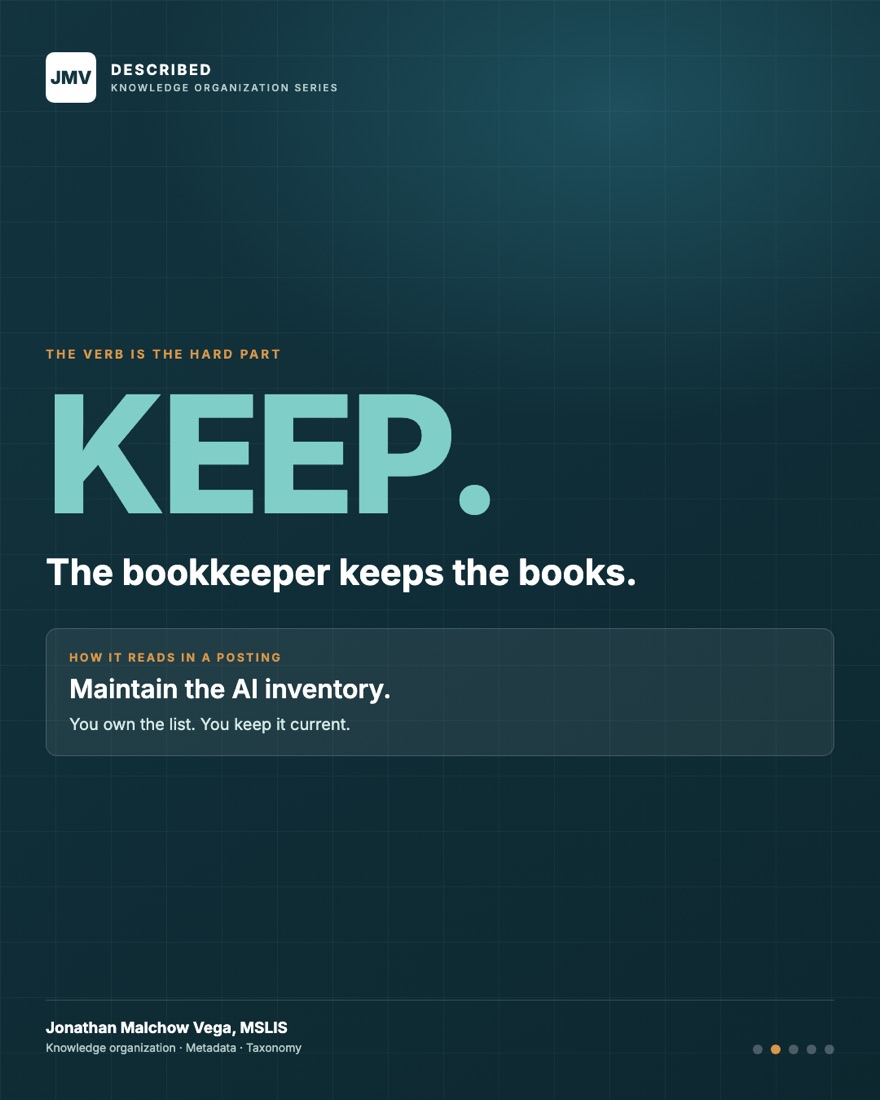
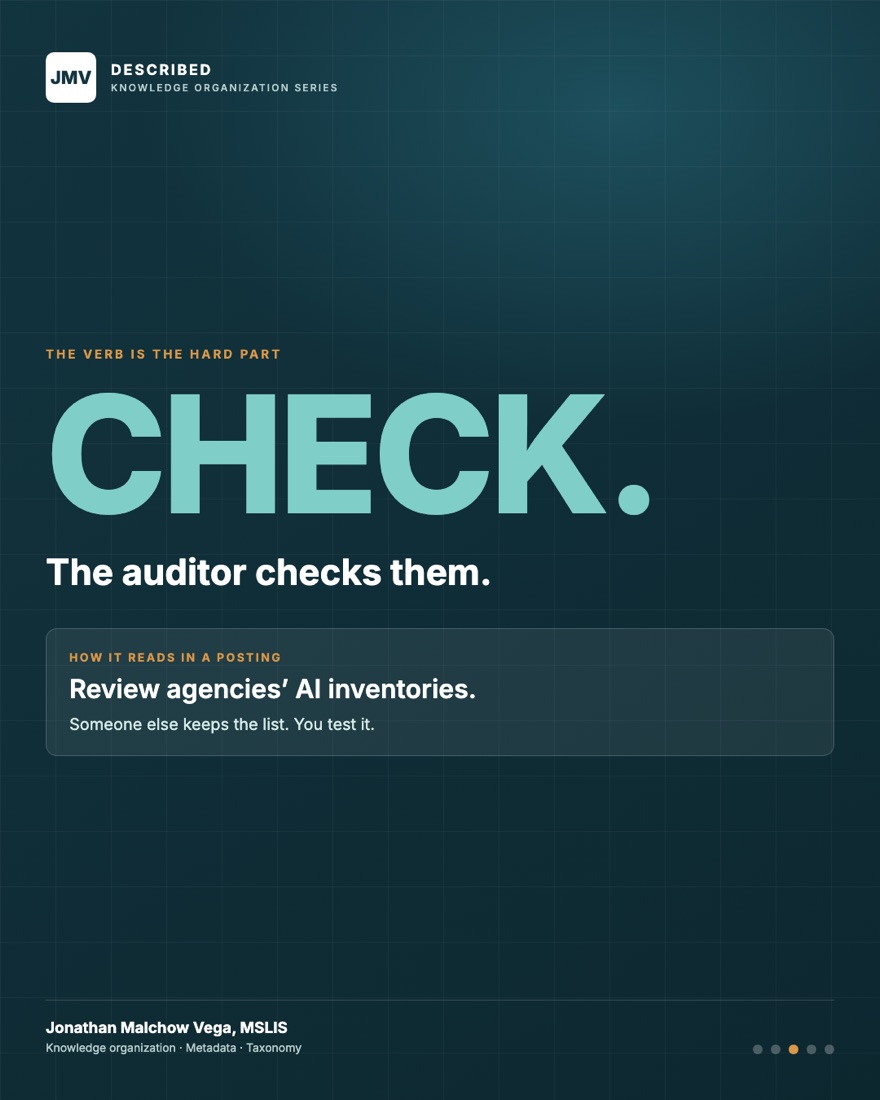
It is a way to read the verb behind a task. Keeping means owning a record, such as an AI inventory. Checking means reviewing a record someone else keeps. Recommending means advising what should exist while someone else does it. Postings that share a topic can still be different jobs.
Who writes DESCRIBED?
Jonathan Malchow Vega holds an MSLIS in Archives Management from Simmons University and is completing an ALM at Harvard Extension School. He works on metadata, taxonomy and knowledge organization.